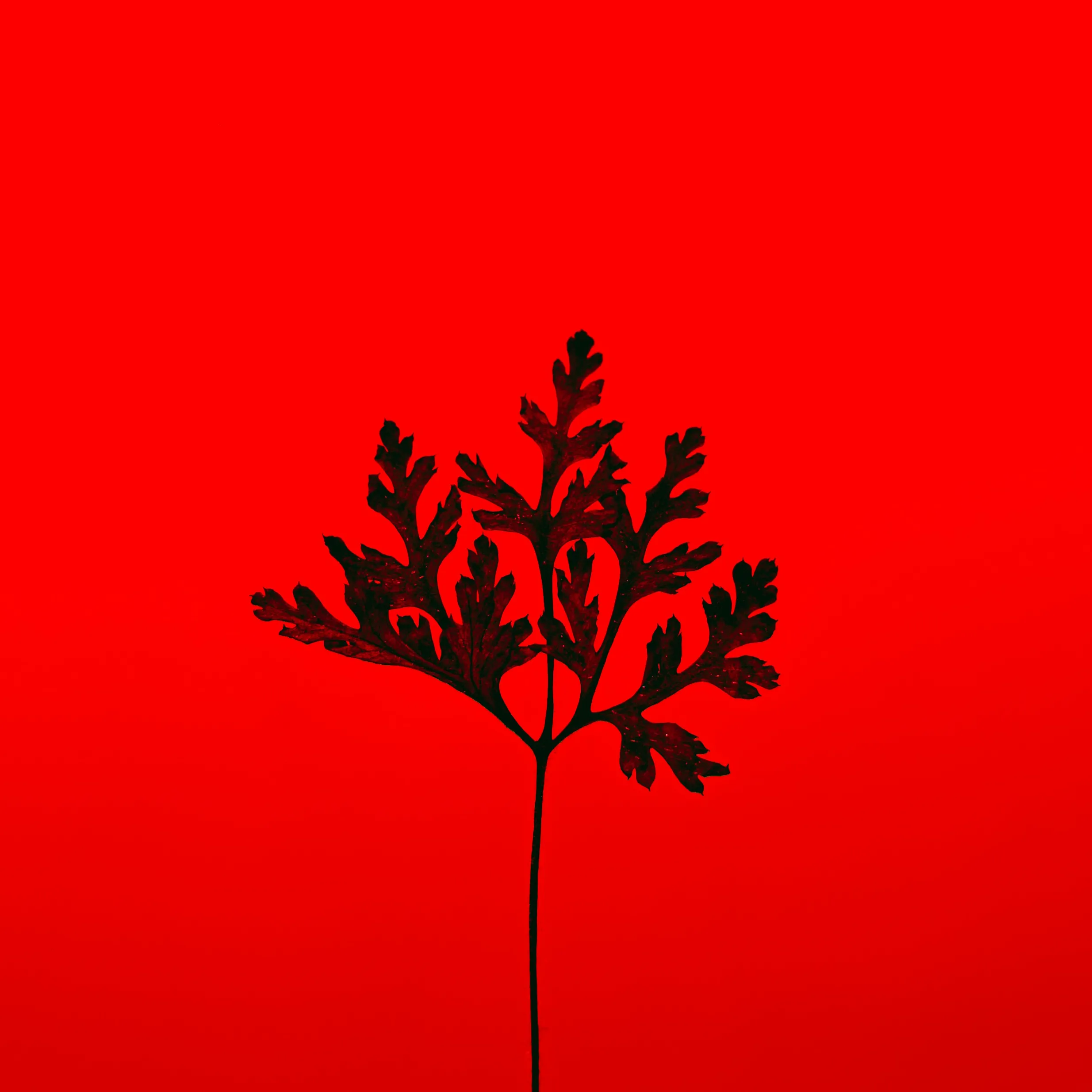
Alcantarea imperialis
Imperial Bromeliad
The imperial bromeliad (Alcantarea imperialis, syn. Vriesea imperialis) is one of the largest bromeliads in the world, occurring naturally in rocky southeastern regions of the Mata Atlântica (Atlantic Forest). The reference workflow follows the LFDGV/CCA/UFSC benchmark described in Jain & Ochatt (2010).
This impressive, magnificent giant bromeliad reaches 90-120 cm high in full sun but can grow up to 2 m. The spineless leaves with dark green superior side and purple inferior side form a massive rosette from which emerges the flower stalk.
The huge inflorescence blooms from mid-summer to early fall bearing white flowers protected by large bracts ranging from purple to dark green. In cultivation, flowering occurs in 5-7 years versus 50 years in nature.
Basal Medium Reference (MS + Morel)
Murashige & Skoog salts plus Morel vitamins form the basal medium for all stages.
| Component | Stock | Volume | Final in 1 L |
|---|---|---|---|
| NH₄NO₃ | 82.5 g/L | 20 mL | 1,650 mg/L |
| KNO₃ | 95.0 g/L | 20 mL | 1,900 mg/L |
| CaCl₂·2H₂O | 88.0 g/L | 5 mL | 440 mg/L |
| KH₂PO₄ | 34 g/L | 5 mL | 170 mg/L |
| MgSO₄·7H₂O | 74 g/L | 5 mL | 370 mg/L |
| Fe-EDTA solution | 37.3 & 27.8 g/L | 10 mL | Fe chelate pair |
| Micronutrient mix | 1.24–0.0055 g/L | 5 mL | Boron, iodine, molybdenum, cobalt |
| Morel vitamins | 1–100 mg/L | full strength | Thiamine, pyridoxine, nicotinic acid, Ca pantothenate, myo-inositol, glycine |
| Sucrose | - | - | 30 g/L |
Operational Timeline (PDF Benchmark)
Stage 1 · Weeks 0–28
Induction
NAA 2 μM + BAP 4 μM, 3× subculture at 6-week intervals
Stage 2 · Variable
Multiplication
TDZ 0.1 μM, 6:1 multiplication rate
Stage 3 · Weeks 28–38
Elongation
PGR-free MS medium, natural elongation
Stage 4 · Weeks 38–47
Acclimatization
2:1:1 substrate, 98% survival (highest)
Stage 1: Induction (28 weeks total)
- Step 1 Inoculate buds over filter paper bridges in test tubes (25 mm × 150 mm).
- Step 2 Use 15 mL liquid culture medium per tube.
- Step 3 Medium composition: MS salts + Morel vitamins + Sucrose 30 g/L + NAA (2 μM) + BAP (4 μM)
- Step 4 Culture conditions: 25°C ± 2°C, 16h Photoperiod (50-60 μmol/m²/s), 60% ± 5% RH
- Step 5 After , nodule cluster cultures arise from explants.
- Step 6 Subculture 3 times at 6-week intervals in the same medium.
- Step 7 Total induction: 10 weeks + (3 × 6 weeks) = 28 weeks
Stage 2: Multiplication with Thidiazuron
Alcantarea imperialis is one of the most cultivated bromeliads in gardens worldwide. Tissue culture enables rapid propagation of this slow-growing giant, reducing the time to flowering from 50 years (wild) to 5-7 years (cultivation).
- Step 1 Subculture 5-8 microshoot clusters per 300 mL flask.
- Step 2 Use 15 mL liquid medium per flask.
- Step 3 Medium: MS salts + Morel vitamins + Sucrose 30 g/L + Thidiazuron (TDZ) (0.1 μM)
- Step 4 Multiplication rate: 6:1 per cycle
- Step 5 Cost advantage: TDZ at 0.1 μM is significantly more economical than traditional BAP/NAA combinations
Stage 3: Elongation (10 weeks)
- Step 1 Subculture 8-10 microshoot clusters per 300 mL flask.
- Step 2 Use 15 mL liquid medium per flask.
- Step 3 Medium: MS salts + Morel vitamins + Sucrose 30 g/L, free of PGR
- Step 4 Culture for until shoots reach ≥3.0 cm length.
- Step 5 Note: No exogenous GA₃ required - natural elongation in PGR-free medium is sufficient
Stage 4: Acclimatization (9 weeks)
- Step 1 Transfer shoots ≥3.0 cm to trays of 128 cells (60 cm³ each).
- Step 2 Substrate composition: 2:1:1 (v:v:v) Plantmax® HA : pine bark : carbonized rice coat
- Step 3 Place trays in nebulization tunnel or greenhouse with controlled mist system.
- Step 4 Provide 50% shade using shade cloth to prevent light stress.
- Step 5 Weekly application of ¼ MS salts solution as foliar spray.
- Step 6 Duration: in mist environment
- Step 7 Survival rate: 98% (highest among tested bromeliads)
Giant Bromeliad Comparison
Compare protocols for large-rosette bromeliads from the PDF benchmark.
| Species | Induction | Multiplication | Elongation | Survival |
|---|---|---|---|---|
| A. imperialis | 28 weeks | TDZ 0.1 μM (6:1) | PGR-free | 98% |
| V. hieroglyphica | 28 weeks | TDZ 0.1 μM (6:1) | PGR-free | 95% |
| V. fosteriana | 28 weeks | TDZ 0.1 μM (14:1) | PGR-free | 98% |
Special Considerations for Giant Species
- Extended induction period: Larger species require longer stabilization (28 weeks vs 8-10 for smaller species)
- Container size: May need larger flasks as plants develop if prolonged in vitro culture needed
- Substrate quality: Excellent drainage essential for this lithophytic (rock-dwelling) species
- Acclimatization space: Plan for eventual large rosette size (90-120 cm diameter)
- Slow growth: Even with tissue culture, expect 5-7 years to flowering
- High value: 98% survival rate justifies investment in quality substrate and controlled environment
Key Success Factors
- Patient induction: Full 28-week induction ensures stable nodule cluster formation
- TDZ precision: Exactly 0.1 μM - do not increase concentration
- Natural elongation: PGR-free medium allows natural, sturdy shoot development
- Size threshold: Strictly enforce 3.0 cm minimum for acclimatization
- Substrate drainage: Rocky origin requires excellent drainage - three-component mix ideal
- Gradual transition: Controlled mist critical for maintaining high 98% survival
- Conservation value: Enables propagation of this magnificent species without wild collection