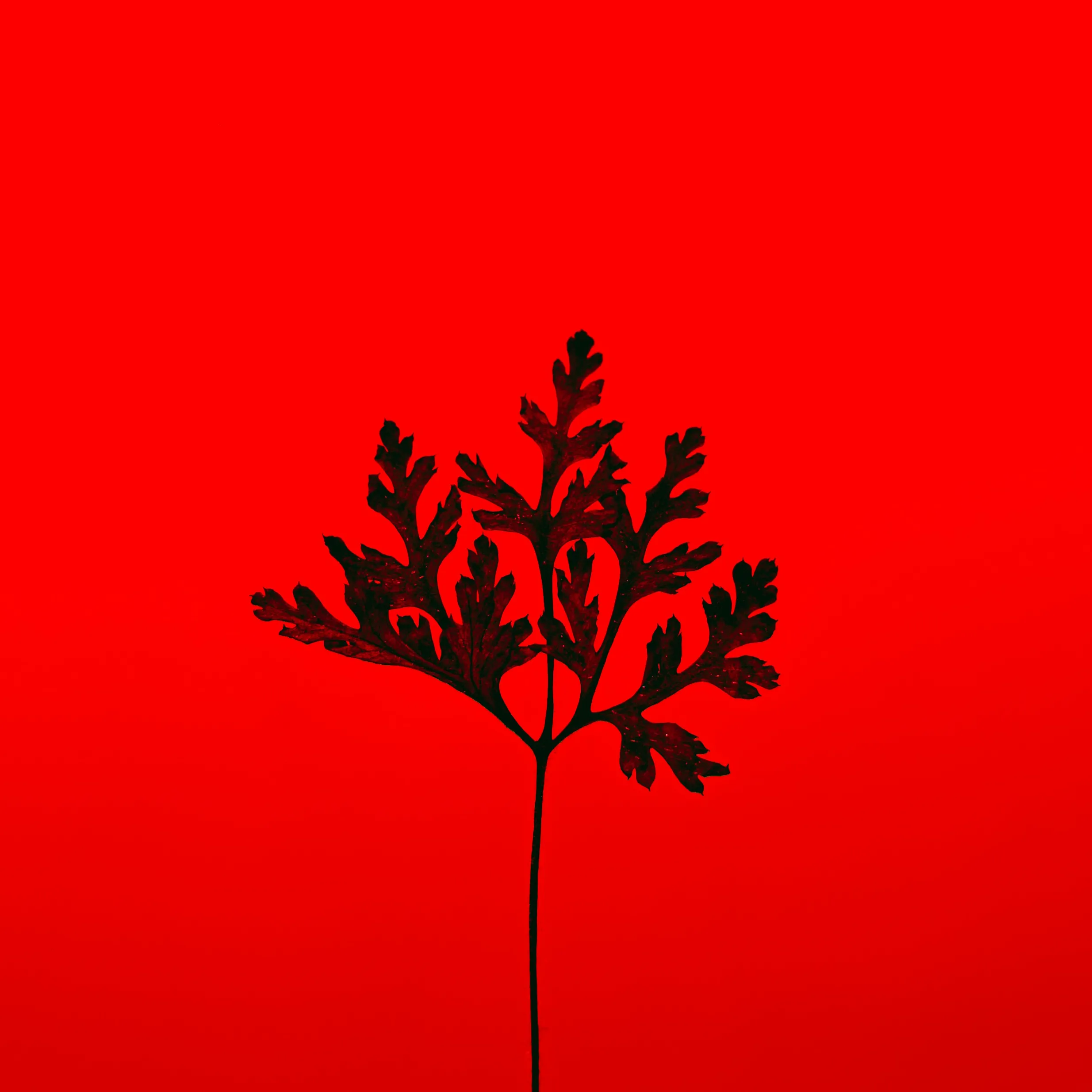
Dyckia distachya
Endemic Brazilian Bromeliad
Dyckia genus (Pitcairnioideae) comprises 121 species occurring exclusively in southwest South America. Dyckia distachya is an endemic and endangered bromeliad native to western Santa Catarina State, southern Brazil. The reference workflow follows the LFDGV/CCA/UFSC benchmark described in Jain & Ochatt (2010).
This bromeliad shows several ornamental features and occurs in the Brazilian Atlantic Forest, considered one of the most important plant diversity centers and a biodiversity hotspot. Most bromeliads in this biome are endemic.
Two regenerative protocols are provided: somatic embryogenesis using Picloram induction, and direct organogenesis from seeds using BAP/Kinetin. Both serve conservation and commercial propagation needs.
Protocol A: Somatic Embryogenesis
Stage 1: Induction (8 weeks)
- Step 1 Collect green capsules from flower stalks of mother plants.
- Step 2 Sterilization : 70% ethanol () → 1.5% sodium hypochlorite + 2-3 drops Tween 20 () → rinse 3× in sterile water
- Step 3 Open capsules aseptically and inoculate 10 seeds per Petri dish.
- Step 4 Medium: MS salts + Morel vitamins + Sucrose 30 g/L + Agar 6 g/L + Picloram (5 μM)
- Step 5 Use 20 mL medium per Petri dish.
- Step 6 Culture in dark: 25°C ± 1°C, 60% ± 5% RH
- Step 7 After , proembryogenic cellular masses are observed.
Stage 2: Development (6 weeks)
- Step 1 Proembryogenic masses evolve into embryogenic cultures after in dark.
Stage 3: Maturation & Conversion (30-45 days)
- Step 1 Subculture 0.5 g embryogenic cultures in Petri dishes.
- Step 2 Use 20 mL culture medium per dish.
- Step 3 Medium: MS + Morel vitamins + Sucrose 30 g/L + Agar 6 g/L + 2-iP (5 μM) + NAA (0.5 μM)
- Step 4 Transfer to light: 25°C ± 2°C, 16h Photoperiod (50-60 μmol/m²/s)
- Step 5 After , somatic embryos develop to mature stage and convert to plantlets.
Stage 4: Plantlet Development
- Step 1 Subculture plantlets in Petri dishes with 20 mL fresh medium.
- Step 2 Medium: MS + Morel vitamins + Sucrose 30 g/L + Agar 6 g/L, free of PGR
- Step 3 Allow initial plantlet development in hormone-free medium.
Stage 5: Acclimatization (6 weeks)
- Step 1 Transfer shoots >3 cm to 72-cell trays (120 cm³ each).
- Step 2 Substrate options:
- 1:1 (v:v) carbonized rice coat + Turfa Fértil® (N:4%, P₂O₅:14%, K₂O:8%), or
- 2:2:1 (v:v:v) peat : vermiculite : sand
- Step 3 Greenhouse with controlled mist for .
Protocol B: Direct Organogenesis from Seeds
Stage 1: Seed Collection & Sterilization
- Step 1 Collect seed-containing capsules from mother plants and seal in polyethylene bags.
- Step 2 Sterilization : Same as Protocol A (see above)
Stage 2: Induction (6 weeks)
- Step 1 Open capsules aseptically and inoculate 10 seeds per Petri dish.
- Step 2 Use 20 mL culture medium per dish.
- Step 3 Medium: MS salts + Morel vitamins + Sucrose 30 g/L + Agar Sigma® 6 g/L + BAP (2 μM) + Kinetin (2 μM)
- Step 4 Conditions: 25°C ± 2°C, 16h light, 60% ± 5% RH
Stage 3: Multiplication (6 weeks)
- Step 1 After , subculture 5-8 shoot clusters per 300 mL flask.
- Step 2 Use 15 mL liquid culture medium per flask.
- Step 3 Medium: MS + Morel vitamins + Sucrose 30 g/L + NAA (2 μM) + BAP (4 μM) + Paclobutrazol (PBZ) (6 μM)
Stage 4: Elongation (6 weeks)
- Step 1 Subculture 5-8 clusters for .
- Step 2 Use 300 mL flasks with 20 mL liquid medium.
- Step 3 Medium: MS + Morel vitamins + Sucrose 30 g/L + GA₃ (5 μM)
Stage 5: Acclimatization (18 weeks)
- Step 1 Transfer shoots >3.0 cm to trays of 128 cells (60 cm³ each).
- Step 2 Substrate: 2:2:1 (v:v:v) peat : vermiculite : sand
- Step 3 Greenhouse with controlled mist for .
- Step 4 Survival rate: 92%
Protocol A Timeline (PDF Benchmark)
Stage 1 · Weeks 0–8
Induction (Dark)
Picloram 5 μM, proembryogenic masses form
Stage 2 · Weeks 8–14
Development (Dark)
Embryogenic cultures develop
Stage 3 · Weeks 14–18
Maturation (Light)
2-iP 5 μM + NAA 0.5 μM, embryo conversion
Stage 4 · Variable
Plantlet Development
PGR-free medium
Stage 5 · Weeks 18–24
Acclimatization
6 weeks in controlled mist
Protocol B Timeline (PDF Benchmark)
Stage 1 · Day 0
Seed Sterilization
70% EtOH + 1.5% NaOCl
Stage 2 · Weeks 0–6
Induction
BAP 2 μM + Kinetin 2 μM
Stage 3 · Weeks 6–12
Multiplication
NAA 2 μM + BAP 4 μM + PBZ 6 μM
Stage 4 · Weeks 12–18
Elongation
GA₃ 5 μM
Stage 5 · Weeks 18–36
Acclimatization
18 weeks, 92% survival
Protocol Comparison
Choose Protocol A for high multiplication potential or Protocol B for faster turnaround.
| Aspect | Protocol A (Somatic Embryo) | Protocol B (Organogenesis) |
|---|---|---|
| Explant | Seeds from green capsules | Seeds from mature capsules |
| Induction | Picloram 5 μM (dark) | BAP 2 μM + Kin 2 μM (light) |
| Pathway | Somatic embryogenesis | Direct organogenesis |
| Induction Time | 14 weeks (dark) | 6 weeks (light) |
| Multiplication | 2-iP 5 μM + NAA 0.5 μM | NAA + BAP + PBZ 6 μM |
| Acclimatization | 6 weeks | 18 weeks |
| Survival | Not specified | 92% |
| Best For | High multiplication potential | Faster, simpler protocol |
Key Success Factors
Protocol A (Somatic Embryogenesis)
- Dark culture essential: Embryogenic induction requires complete darkness
- Picloram concentration: 5 μM optimal for proembryogenic mass formation
- Light transition: Transfer to light only after embryogenic cultures form
- 2-iP conversion: Critical for embryo maturation and plantlet conversion
- PGR-free development: Allows natural plantlet establishment
Protocol B (Direct Organogenesis)
- Dual cytokinin: BAP + Kinetin combination promotes direct shoot formation
- PBZ application: Prevents hyperhydricity, produces compact shoots
- GA₃ elongation: Essential for achieving adequate shoot size
- Extended acclimatization: 18 weeks needed for 92% survival
- Substrate drainage: Peat:vermiculite:sand mix ideal for this terrestrial species