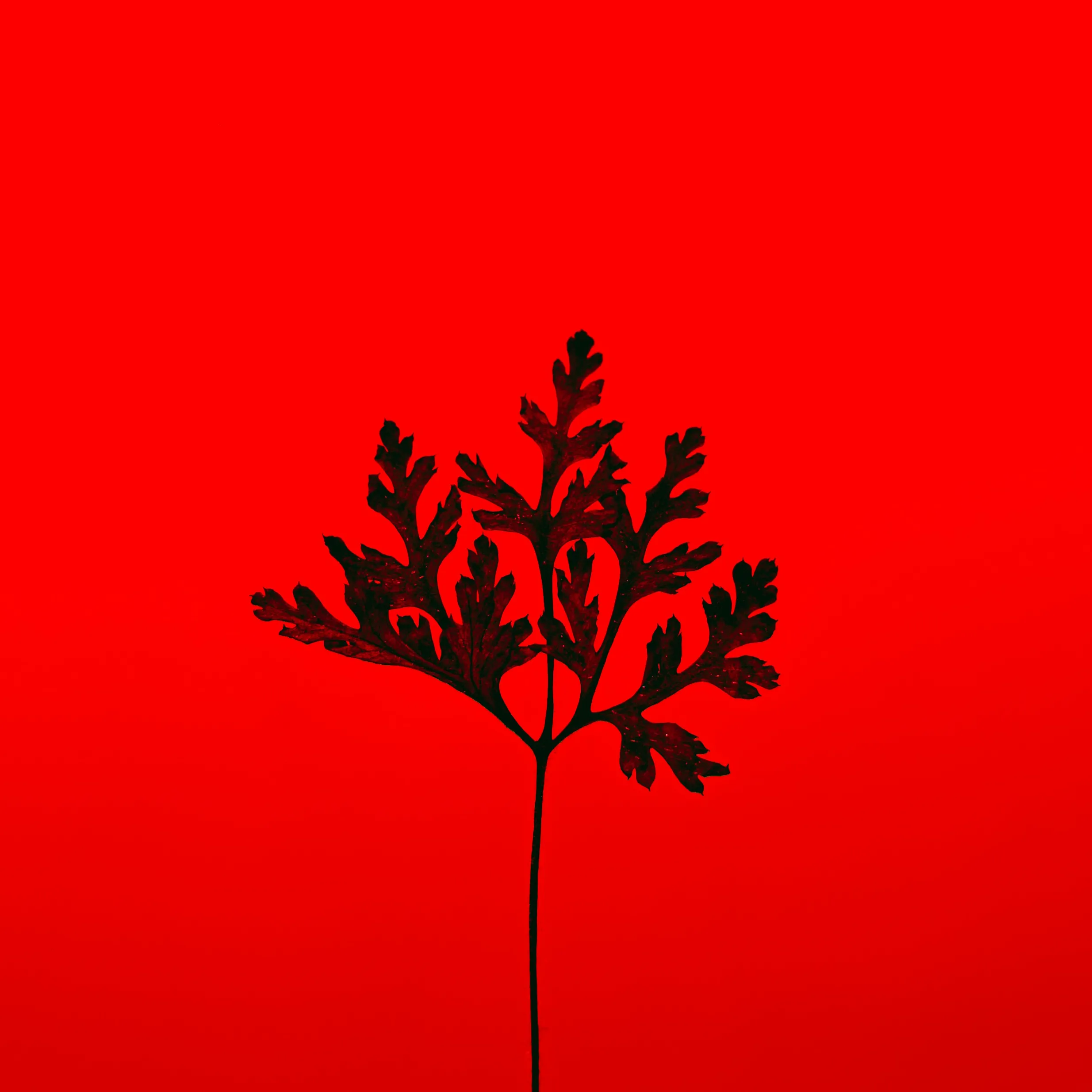
Vriesea reitzii
Endemic South Brazil
Vriesea reitzii is an endemic bromeliad in South Brazil with excellent potential as an ornamental plant. This species presents red and yellow colored inflorescences and occurs in regions with altitudes from 750 to 1,200 m. The reference workflow follows the LFDGV/CCA/UFSC benchmark described in Jain & Ochatt (2010).
The species name honors Raulino Reitz, the "father of bromeliads" in Brazil. The ecosystem where this bromeliad is distributed, the Araucarian Mixed Forest, was severely devastated during the last century.
Two protocols are provided: Protocol A uses adventitious shoots from nodule clusters, while Protocol B focuses on regeneration from nodule cluster cultures with different hormone combinations.
Basal Medium Reference (MS + Morel)
Both protocols use Murashige & Skoog salts plus Morel vitamins as the basal medium.
| Component | Stock | Volume | Final in 1 L |
|---|---|---|---|
| NH₄NO₃ | 82.5 g/L | 20 mL | 1,650 mg/L |
| KNO₃ | 95.0 g/L | 20 mL | 1,900 mg/L |
| CaCl₂·2H₂O | 88.0 g/L | 5 mL | 440 mg/L |
| KH₂PO₄ | 34 g/L | 5 mL | 170 mg/L |
| MgSO₄·7H₂O | 74 g/L | 5 mL | 370 mg/L |
| Fe-EDTA solution | 37.3 & 27.8 g/L | 10 mL | Fe chelate pair |
| Micronutrient mix | 1.24–0.0055 g/L | 5 mL | Boron, iodine, molybdenum, cobalt |
| Morel vitamins | 1–100 mg/L | full strength | Thiamine, pyridoxine, nicotinic acid, Ca pantothenate, myo-inositol, glycine |
| Sucrose | - | - | 30 g/L |
Protocol A: Adventitious Shoots from Nodule Cluster
Stage 1: Induction (10 weeks)
- Step 1 Inoculate buds over filter paper bridges in test tubes (25 mm × 150 mm).
- Step 2 Use 15 mL liquid medium: MS + Morel vitamins + Sucrose 30 g/L + NAA (2 μM) + BAP (4 μM)
- Step 3 After , subculture with NAA (1 μM) + BAP (2 μM) for another 10 weeks.
Stage 2: Multiplication
- Step 1 Inoculate 5-8 microshoot clusters in 300 mL flasks with 20 mL liquid medium.
- Step 2 Medium: MS + Morel vitamins + Sucrose 30 g/L + NAA (2 μM) + BAP (4 μM)
- Step 3 Yellow and green nodular clumps develop at basal region within .
- Step 4 Subculture 0.05 g nodular clumps twice at 9-week intervals in same medium.
- Step 5 Nodular clumps evolve to nodular cluster cultures bearing microshoots.
Long-term Maintenance
Maintain nodular clumps in 300 mL flasks with 15 mL liquid medium free of PGR .
Multiplication Option 1
- Step 1 Subculture 0.05 g nodule clusters in 300 mL flasks.
- Step 2 Use 10 mL liquid medium with NAA (2 μM) + BAP (4 μM).
Multiplication Option 2
- Step 1 Inoculate previously elongated shoots (1.0-2.5 cm) in 300 mL flasks.
- Step 2 Use 20 mL liquid medium with NAA (1 μM) + BAP (2 μM).
- Step 3 Multiplication rate: Up to 20:1 after .
Stage 3: Elongation (16 weeks total)
- Step 1 Subculture 10 microshoot clusters per 300 mL flask with 15 mL liquid medium.
- Step 2 First 8 weeks: Medium with GA₃ (10 μM).
- Step 3 Next 8 weeks: Transfer to same medium free of PGR .
Stage 4: Acclimatization (9 weeks)
- Step 1 Transfer shoots >3 cm to trays of 72 cells (120 cm³ each).
- Step 2 Substrate: 1:1 (v:v) carbonized rice coat + Turfa Fértil® (N:4%, P₂O₅:14%, K₂O:8%)
- Step 3 Greenhouse with controlled mist until shoots reach 4-5 cm.
Protocol B: Regeneration from Nodule Cluster Cultures
Stage 1: Induction (7 weeks)
- Step 1 Remove 0.5 mm segments from basal region of young leaves from established microshoots.
- Step 2 Inoculate 5-8 segments in Petri dishes with 25 mL culture medium.
- Step 3 Medium: MS + Morel vitamins + Sucrose 30 g/L + Agar 7 g/L + 2,4-D (20 μM) + Kinetin (1 μM)
- Step 4 After , nodular cluster cultures arise from basal region.
Stage 2: Establishment & Development (8 weeks)
- Step 1 Subculture 0.25 g nodular cluster cultures.
- Step 2 Medium: MS + Morel vitamins + Sucrose 30 g/L + 2-iP (2.5 μM) + NAA (0.5 μM)
Stage 3: Multiplication (6 weeks)
- Step 1 Subculture 0.5 g nodular clusters for .
- Step 2 Medium: Same as above but free of PGR .
- Step 3 Clusters of microshoots evolve from nodular cultures.
Stage 4: Elongation
- Step 1 Subculture 8-10 clusters of microshoots in 300 mL flasks.
- Step 2 Use 15 mL liquid medium with GA₃ (10 μM).
Stage 5: Acclimatization (9 weeks)
- Step 1 Transfer shoots >3 cm to trays of 128 cells (60 cm³ each).
- Step 2 Substrate: 1:1 (v:v) carbonized rice coat + Turfa Fértil®
- Step 3 Nebulization tunnel, then transfer to pots after .
- Step 4 Survival rate: 95%
Protocol A Timeline (PDF Benchmark)
Stage 1 · Weeks 0–20
Induction
NAA 2 μM + BAP 4 μM → subculture with NAA 1 μM + BAP 2 μM
Stage 2 · Weeks 20–38
Multiplication
Nodular clumps in 300 mL flasks, 9-week subculture intervals
Stage 3 · Weeks 38–54
Elongation
GA₃ 10 μM for 8 weeks → PGR-free for 8 weeks
Stage 4 · Weeks 54–63
Acclimatization
1:1 carbonized rice coat + Turfa Fértil®, nebulization tunnel
Protocol B Timeline (PDF Benchmark)
Stage 1 · Weeks 0–7
Induction
2,4-D 20 μM + Kinetin 1 μM on agar medium
Stage 2 · Weeks 7–15
Establishment
2-iP 2.5 μM + NAA 0.5 μM
Stage 3 · Weeks 15–21
Multiplication
PGR-free medium
Stage 4 · Weeks 21–29
Elongation
GA₃ 10 μM in liquid medium
Stage 5 · Weeks 29–38
Acclimatization
95% survival rate
Protocol Comparison
Choose Protocol A for higher multiplication rates or Protocol B for faster turnaround.
| Aspect | Protocol A | Protocol B |
|---|---|---|
| Explant Source | Buds from shoots | 0.5 mm leaf segments |
| Induction Hormones | NAA + BAP | 2,4-D + Kinetin |
| Medium Type | Liquid throughout | Agar → Liquid |
| Multiplication | NAA + BAP or PGR-free | PGR-free only |
| Max Rate | 20:1 | High rate |
| Total Time | ~63 weeks | ~38 weeks |
| Survival | High | 95% |
Key Success Factors
- Protocol selection: Choose based on explant availability and timeline requirements
- Nodule development: Critical phase requiring proper hormone balance
- PGR-free maintenance: Allows sustainable long-term culture storage
- Elongation timing: Two-phase elongation (with/without GA₃) ensures proper shoot development
- Cell size for acclimatization: Protocol A uses larger cells (120 cm³) for better initial development